Our Lab Director Featured in UppTalk: Multi-Robot Collaboration and Bio-Inspired Systems
Post's content provided by: CPS-Lab Team
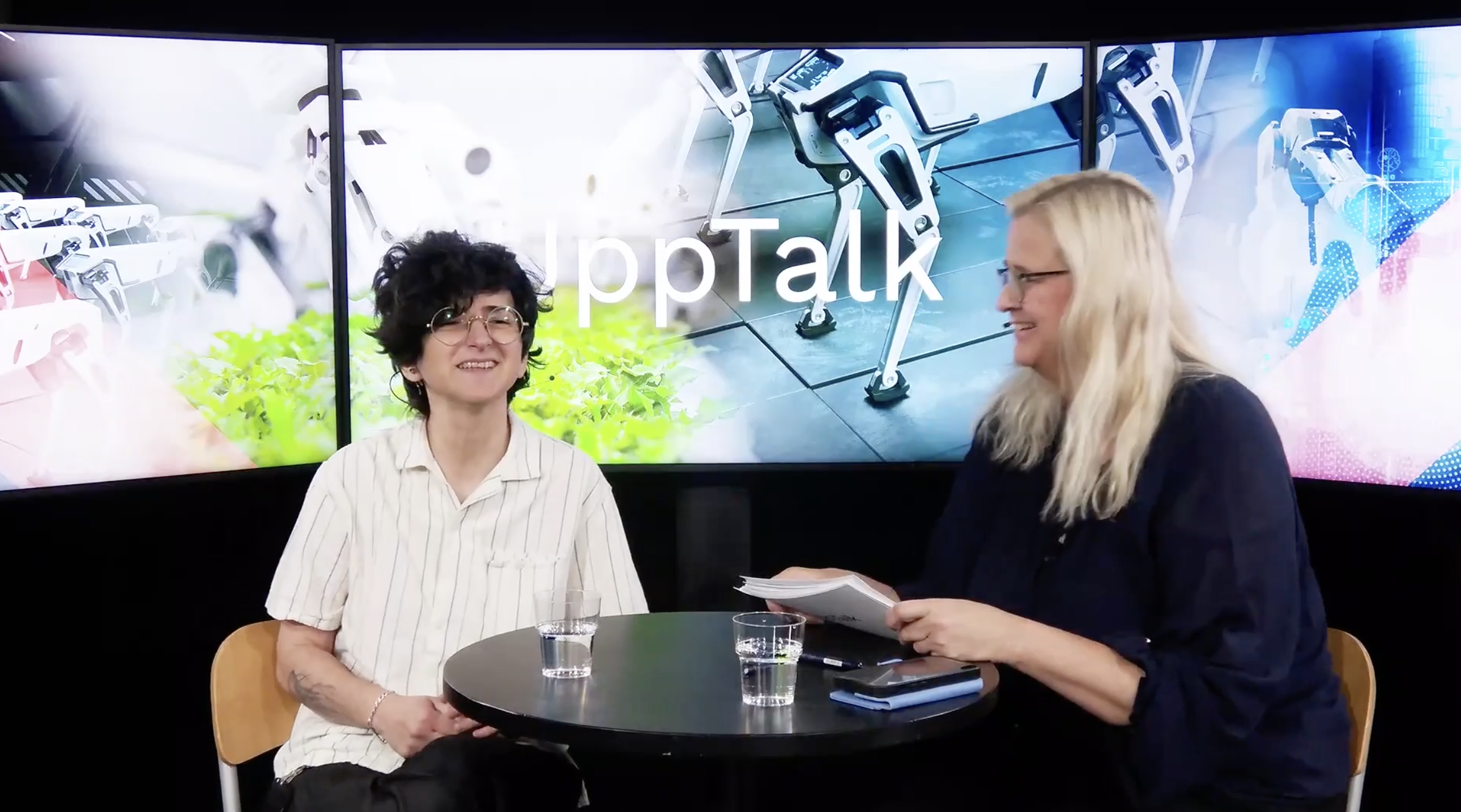
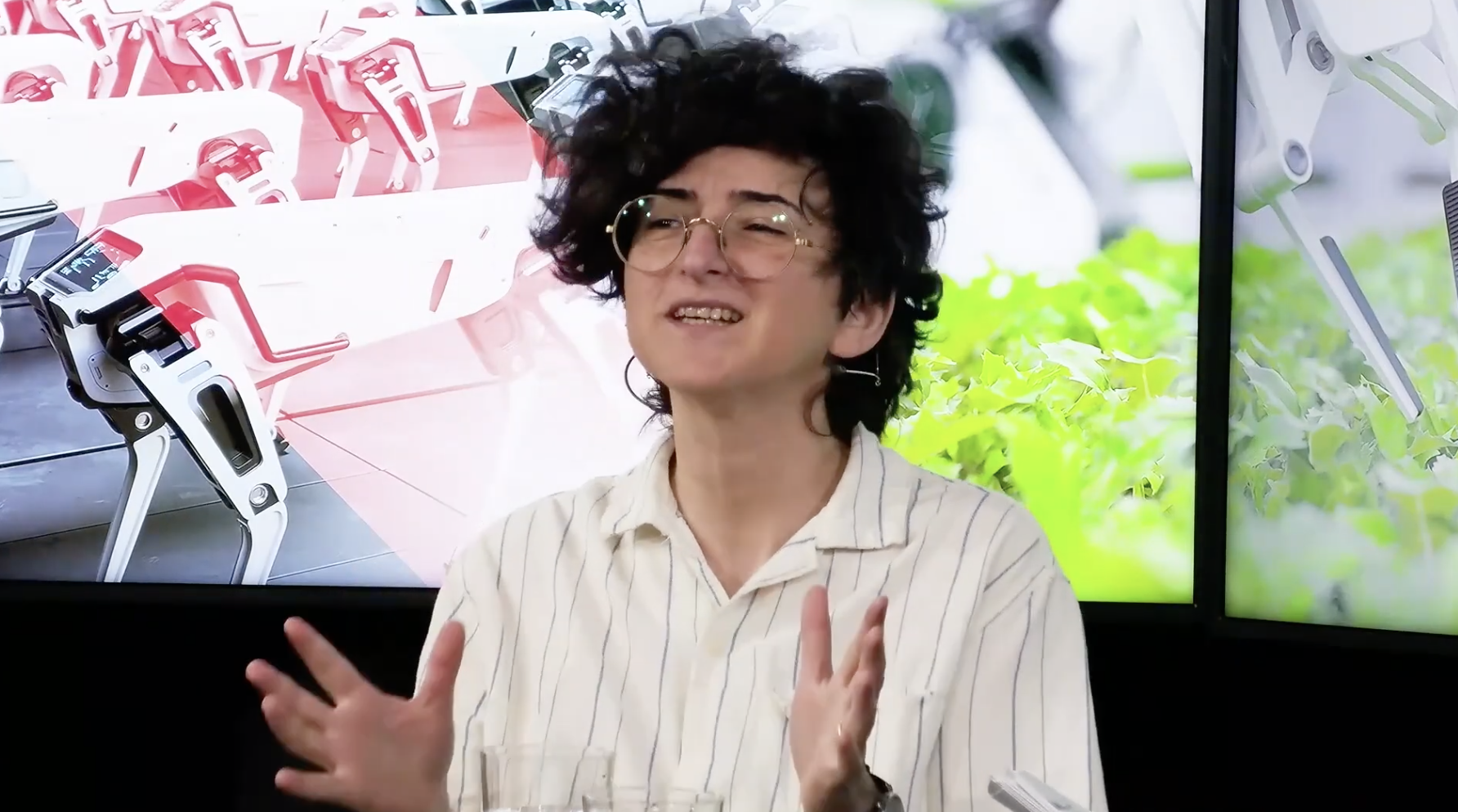
We're excited to share that our lab director, Dr. Didem Gürdür Broo, was recently featured in Uppsala University's UppTalk
series – a popular science seminar that makes cutting-edge research accessible to alumni, and the general public.
The 32-minute conversation, hosted by Anneli Björkman at the Blåsenhus recording studio, offered fascinating insights into our lab's
work on multi-robot systems and the future of human-robot collaboration.
The interview provided an excellent opportunity to explain what cyber-physical systems actually are – a question we get surprisingly
often! As Didem explained, unlike purely software systems or simple IoT devices that primarily collect data, cyber-physical systems
operate in a continuous feedback loop. They observe their environment through sensors, take actions through actuators, and then
re-observe based on those actions. This real-time interaction between the computational and physical worlds is what makes CPS so
powerful and versatile.
A major focus of the conversation was our lab's work on multi-robot systems. Rather than optimizing individual robots, we're interested in understanding how different types of robots can collaborate effectively. As Didem emphasized, we don't just focus on perfecting one type of robot – we deliberately work with diverse platforms:
- High-precision robotic arms
- Mobile platforms with smaller manipulators
- Quadruped robots (like our star, Loke!)
- Autonomous Robot cars
The key questions driving our research: When should they collaborate? How should they communicate? What algorithms we can develop
to enable heterogeneous teams to work toward common goals?
One of the most compelling parts of the interview explored how biological ecosystems inspire our research approach. During research
visits to marine stations in Kristineberg and Askö, Didem observed that thriving ecosystems aren't populated by identical organisms.
Instead, diversity – different species, sizes, and capabilities – creates resilience and efficiency.
This principle directly informs our multi-robot research. Just as forests and oceans benefit from biodiversity, robot teams become
more capable when they're heterogeneous rather than homogeneous.
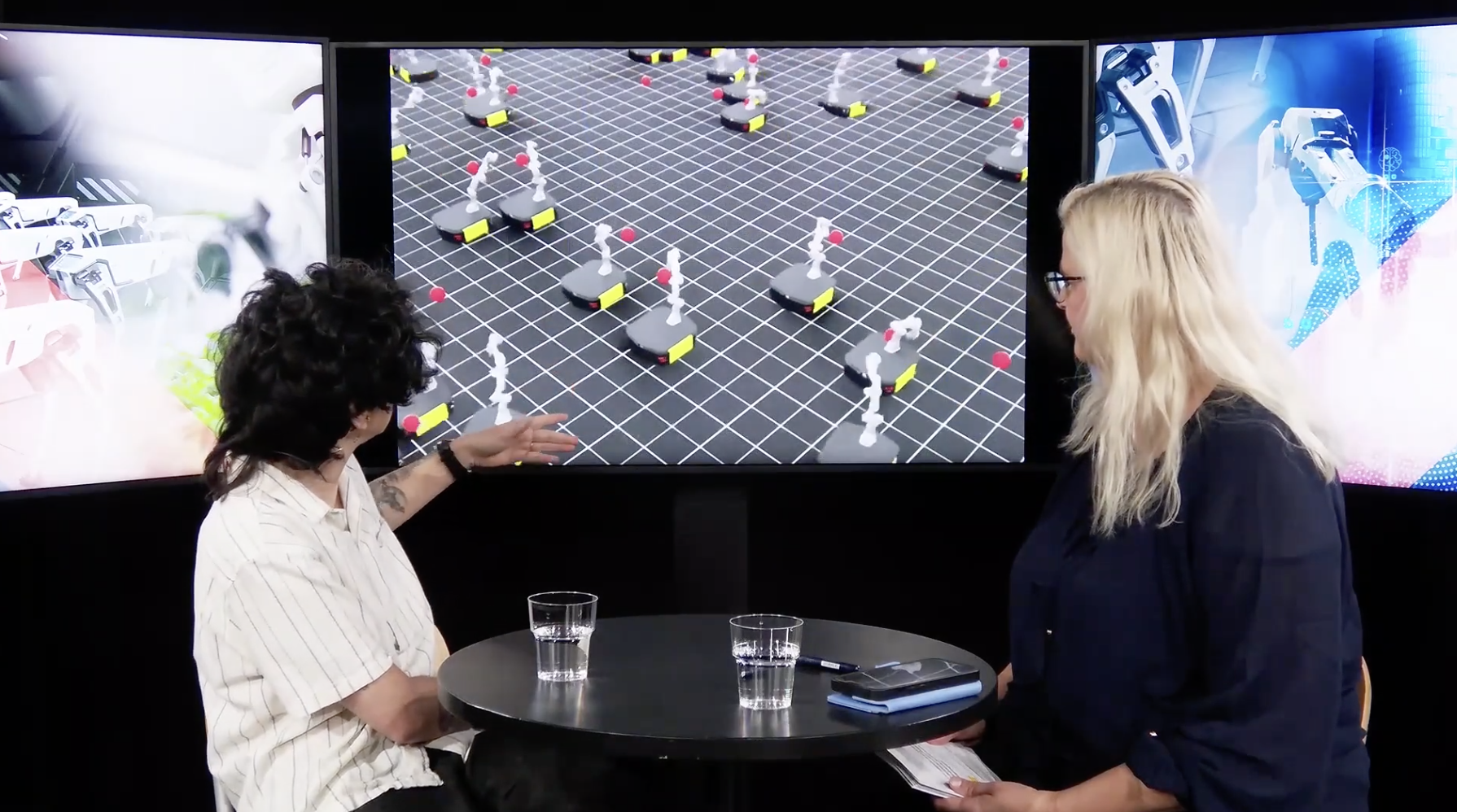
The interview included demonstrations of our simulation environments where robots learn through multi-agent reinforcement learning.
Instead of explicitly programming every action, we define rewards and penalties, allowing algorithms to discover optimal strategies
through trial and error.
Examples shown included:
- Balancing a stick on a moving cube – a classic control problem solved through reward-based learning
- Robotic hands passing a ball between each other – demonstrating coordinated manipulation
- Mobile bases with robotic arms navigating complex tasks
One major advantage of simulation is that we can train hundreds or even thousands of robots simultaneously, something impossible
in a physical lab. Once trained, these learned behaviors transfer to our physical robots.
While the interview touched on many specific technical topics, it also conveyed our lab's broader vision: developing cyber-physical
systems that can seamlessly collaborate with each other and with humans across diverse applications – from manufacturing and
logistics to emergency response and healthcare.
The challenge isn't just making individual robots smarter or more capable. It's creating frameworks for interoperability,
developing protocols for multi-agent coordination, ensuring systems remain robust and safe in dynamic environments, and ultimately
building technology that enhances rather than replaces human capabilities.
The complete conversation covers much more depth on each of these topics, including detailed technical discussions and live
demonstrations. Whether you're a researcher, student, industry partner, or simply curious about the future of robotics, we encourage
you to watch.
Event Gallery

Join Our Research Community
Interested in multi-robot systems, reinforcement learning, or cyber-physical systems? Our lab is always looking for talented researchers at all levels – PhD students, postdocs, and visiting researchers. We maintain an interdisciplinary team with backgrounds in robotics, computer science, mechatronics, engineering psychology, and related fields. For more information about research opportunities, collaborations, or our ongoing projects, visit our lab website or contact us directly.